Author. Checker. Approver
Three gates on every deliverable. Self-review by the author against the BEP, independent check, senior sign-off. The signature is logged in the ERP.
- 3 gates per deliverable
- Logged in the ERP

Our delivery model is being documented here. In short: we run ISO 19650-compliant pilots first, prove the workflow, then scale into framework agreements. Want a walkthrough? Book a discovery call.
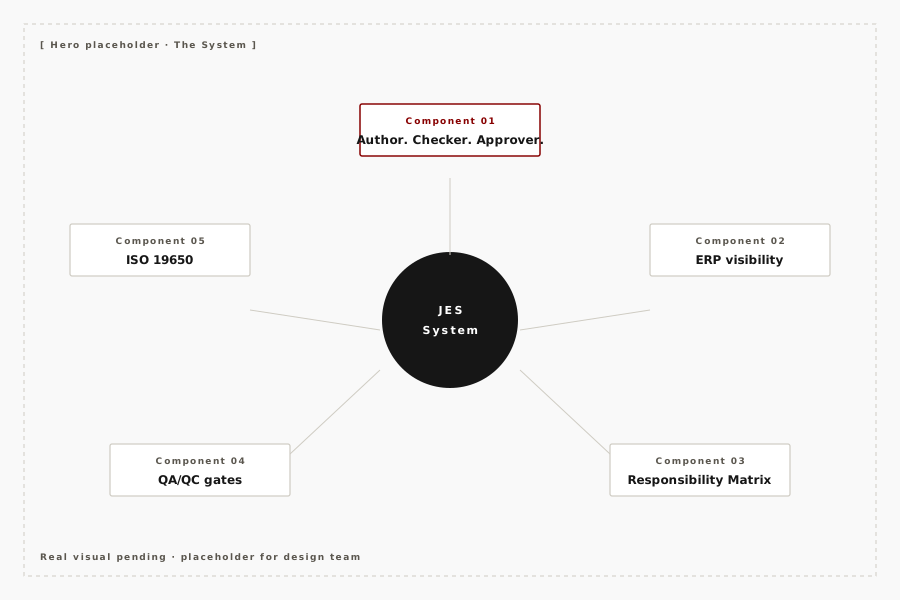
Most BIM outsourcing is personality-dependent. The output depends on who's modelling, who's in the coordination meeting, whether the senior engineer caught the clash before site. That's the bottleneck. Not talent. Consistency.
The same working set we issue on every live engagement: EIR, BEP review checklist, CDE configuration guide and information exchange protocol. Adapted for developer-led programmes with multiple appointed parties.
The reason engineer 1 and engineer 260 produce the same output: a delivery system, not 260 individual judgement calls.
Five interdependent components run on every engagement, every milestone, every deliverable. Each one closes a gap in the previous.
Author, Checker, Approver. ERP visibility. Responsibility Matrix. QA/QC gates. ISO 19650 governance. Each one closes a gap the previous one leaves open.
Three gates on every deliverable. Self-review by the author against the BEP, independent check, senior sign-off. The signature is logged in the ERP.
Real-time view of federation progress, resource hours, RAG-rated compliance, deliverable status. Open to the client at the same moment it's open to JES.
JES and client define who does what, when, to what standard. Both sides sign. LOD, LOIN, out-of-scope items named explicitly. Re-signed at every stage transition.
Structured checkpoints at Schematic, Detail, Tender/IFC, Site Supervision. Compliance, coordination, information completeness. Pass or formal deviation report. The audit trail is built into the cycle.
EIR defined or reviewed. LOIN verified at every stage. CDE protocols enforced (WIP, Shared, Published, Archived). Formal compliance audits feed the AIM handover trail.
Three pairs of eyes on every file. A live dashboard the client opens at will. A signed matrix nobody can argue with. Gates the work has to pass. A standard that holds up at audit. That's why engineer 1 and engineer 260 produce the same output.
Once the engagement starts, the rhythm is fixed. Weekly coordination, live dashboard access, milestone-driven gates. The information is already on the page.
30 minutes with the JES lead, the client's BIM Manager, and any discipline leads needed. Actions logged in the ERP within the hour.
Federation progress, clash count by discipline, deliverable status, resource hours. No status emails.
Schematic, Detail, Tender/IFC, Site Supervision. Structured review against the BEP, EIR, and matrix. Sign-off logged.
The Responsibility Matrix gets reviewed. If scope shifted, the matrix shifts with it. Both sides re-sign.
Standards drift. Coordination depends on the room. Quality varies hire by hire. Clashes surface on site at twice the cost. Handover data is incomplete. The BIM Manager spends the project chasing models instead of managing the standard. The programme slips, the LAD exposure builds, the asset value at handover takes a hit.
Same standard, engineer 1 to engineer 260. Federated model coordinated weekly. Deliverables pass three gates before they reach the client. The Responsibility Matrix kills disputes before they start. The ERP dashboard makes the work transparent. ISO 19650 makes it auditable. The Project Director runs the project, not the BIM scope.
The difference is not which engineers we hire. It is whether the work runs on a process. That's The System.
Both end with a written summary you can use, regardless of whether you engage us further.