
Quantities from BIM, not paper.
Model-based quantity takeoff services for consultants and contractors. Accurate quantities extracted directly from your coordinated BIM model. BOQ development, cost-code mapping and procurement data you can price against.
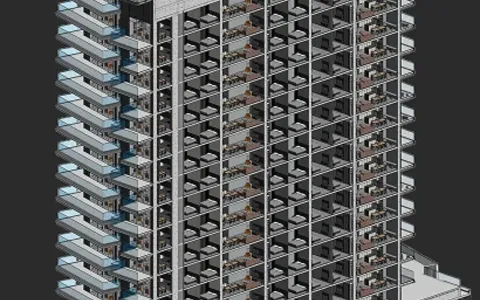




















Manual takeoffs slow tenders down, and breed disputes.
Quantity takeoff (QTO) is how you measure the materials and work in a project, from drawings or the BIM model, to build the bill of quantities. Done by hand, that means QSs measuring off 2D sheets, hours per element, weeks per package, restarted every time a drawing revises. By the time the BOQ catches up, the model has moved on. Variations turn into contested positions instead of measured deltas.
Quantities from the model. Cost-coded, variation-tracked
Element-by-element extraction from your coordinated BIM model, run through Revit schedules, CostX and Assemble. Aligned to your cost codes, tracked across revisions. Tender-ready BOQ in days, not weeks.
Model-based extraction
Element-by-element quantities direct from the coordinated model, not 2D sheets.
No manual takeoff, no drawing-vs-model gaps. The numbers come from the source.
Cost-code alignment
Mapped to NRM2, client-specific or trade-package structures.
Categories the estimator already uses, not raw model elements.
Variation tracking
Every model revision tracked as a quantity delta.
Variations become defensible numbers, not contested positions.
Procurement data
Tender-ready BOQs structured for direct issue to subs.
The QS gets the workbook ready, not data to sort.
One auditable trail, from model to procurement.
Quantities we've extracted
Model-derived quantities, variation deltas and BoQ feeds delivered across high-rise, villa-community and infrastructure programmes.

Sphere Abu Dhabi
The first Sphere venue outside the United States: a 20,000-capacity spherical ve…
Read the case
DWC Airport
Terminal-scale design packages for Dar Al-Handasah on Dubai World Central's next…
Read the case
Dubai Metro Blue Line
MEP modelled and coordinated across Blue Line stations and depots for MNG Esmas,…
Read the case
Wynn Ras Al Khaima
Over 100 people at peak across MEP, structural and interior fit-out packages on …
Read the case
Stargate Data Centre
Every N+1 and 2N redundancy path verified in 3D against Tier-rating requirements…
Read the case
Zayed National Museum
Mechanical, electrical and plumbing threaded through Foster + Partners' steel-fe…
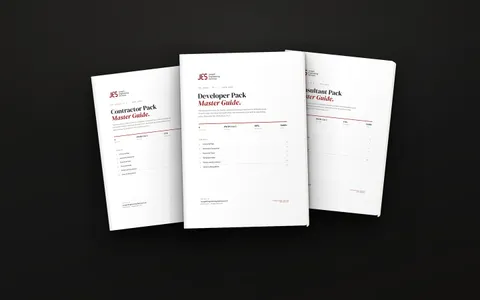
Read the caseThe QTO & Cost ISO 19650 pack.
A working set we issue with every live engagement: BEP, Responsibility Matrix, MIDP/TIDP and LOIN definitions. The same governance that makes a model measurable, so your takeoffs and cost plans hold up.
- Contents
- 20+ documents · Word, Excel & PDF · one zip
- Aligned
- ISO 19650-2 · UK BIM Framework · Uniclass 2015
- Audience
- QSs · Cost Managers · Commercial Leads
How QTO actually runs
-
A UAE PM owns your programme
Onsite, accountable, one name on the contract. Available in your meetings, your time zone, your site walks, across our Dubai delivery and the wider UAE.
-
A 260-person studio delivers the work
Scaled to your programme, ramped up and down as packages move. You pay for capacity, not for a bench.
-
ISO 19650 is baked in, not bolted on
Author-Checker-Approver on every deliverable. EIR, BEP and CDE governed from project setup through handover.
 6 min
6 min
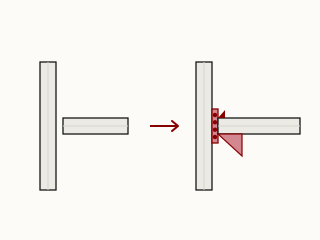
From LOD 350 to fabrication-ready
Why "coordinated" models still cause site rework, and the handoff that fixes it.
Read 5 min
5 min
The BEP subcontractors actually follow
The difference between a filed document and a working agreement is five sections.
Read 6 min
6 min
Zero clashes is not the standard
Zero hard-clash is not the deliverable and it is rarely the end state. Here is the tolerance, severity and gate regime we hold a federated model to before sign-off.
Read 6 min
6 min
QTO as the single source of truth for variations
When quantities come straight from the model, variations stop being arguments and become deltas.
Read 5 min
5 min
As-built from day one
Retrofitting an as-built at practical completion is a tax. Updating it weekly is a habit.
ReadCommon questions about quantity takeoff
A tender-ready bill of quantities, issued as a structured Excel workbook and PDF, package by package for direct issue to subcontractors. Quantities carry your cost codes, so the estimator prices against categories they already use rather than raw model elements.
Model-based takeoff runs through Revit schedules, CostX and Assemble, reading quantities straight from the coordinated model. Cost codes are mapped to NRM2, client-specific or trade-package structures, and variation deltas are reported in Power BI dashboards.
Accuracy tracks the level of detail in the model. A model authored to LOD 300 gives reliable gross quantities; LOD 350 supports coordination-level quantities and LOD 400 fabrication-level takeoff. Where the model is thin, we flag the elements measured by assumption rather than reporting a false precision.
Quantity takeoff extracts and cost-codes the measured quantities from the model. 5D adds cost and time simulation on top, sequencing spend against the programme. We own the extraction and BOQ; the 5D sequencing simulation sits with our VDC team, and the two share one model.
It makes cost positions defensible. Because every quantity traces to a model element and every variation reads as a measured delta, commercial claims rest on evidence rather than contested manual measurement. The saving shows up as fewer disputes and faster tender turnarounds, not a headline figure.