Rework and clashes on site
Conflicts that should have surfaced in coordination only show up when the steel hits the slab. Each one becomes a variation order, a programme delay and a contested cost.

Virtual design and construction: 4D sequencing, 5D cost integration and clash coordination tied to one federated model. Programme conflicts and cost surprises surface in the model, not on site.




















4D, 5D and ESG run on the same model the project team already trusts, the one we clash-coordinate on a regular cycle and sign off in the ICE coordination meeting. No second source of truth, no duplicate measure, no separate report living outside the federation.
4D linkage of the coordinated model with the live programme. Sequencing conflicts, logistics clashes and crane-access issues surface in the model, weeks before they hit site as variation orders.
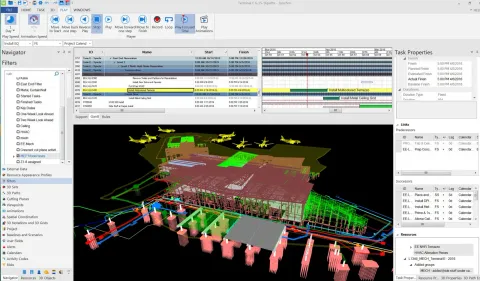
5D integration links the schedule to live cost data. Variations are tracked as quantity deltas, not contested positions. The cost report tracks against the programme, not behind it.
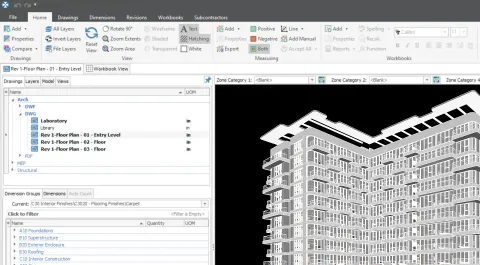
Carbon, energy, water and waste metrics computed from the coordinated model. Material substitution decisions made in design, not retrospectively reported in handover.

Federated models, clash resolution and constructability resolved before site, across high-rise, infrastructure and data-centre projects.

The first Sphere venue outside the United States: a 20,000-capacity spherical ve…
Read the case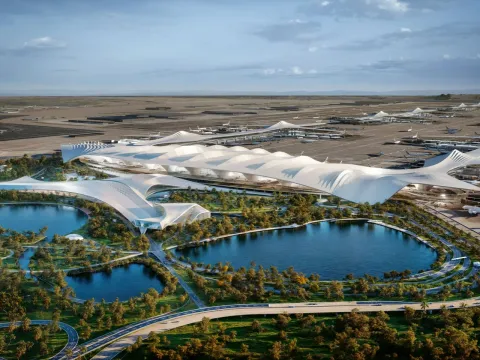
Terminal-scale design packages for Dar Al-Handasah on Dubai World Central's next…
Read the case
MEP modelled and coordinated across Blue Line stations and depots for MNG Esmas,…
Read the case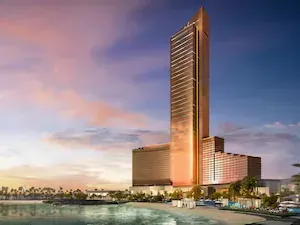
Over 100 people at peak across MEP, structural and interior fit-out packages on …
Read the case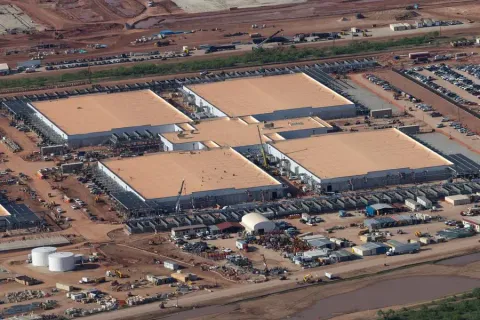
Every N+1 and 2N redundancy path verified in 3D against Tier-rating requirements…
Read the case
Mechanical, electrical and plumbing threaded through Foster + Partners' steel-fe…
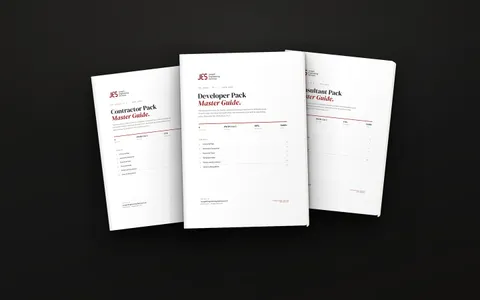
Read the caseA working set we issue with every live VDC engagement: 4D sequencing template, 5D cost integration spec, constructability review checklist and logistics plan template. Adapted for main contractors and developers running stress-tested programmes.
Onsite, accountable, one name on the contract. Walks the sequence with the project team, available in your meetings, your time zone, your site walks.
4D sequencing, 5D cost integration and ESG analysis run by a scaled production team. You pay for capacity against the programme, not for a permanent bench.
Author-Checker-Approver on every sequence and cost run. The VDC outputs sit inside the same governed federation as the BIM Delivery model.
 6 min
6 min
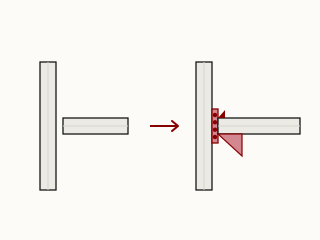
Why "coordinated" models still cause site rework, and the handoff that fixes it.
Read 5 min
5 min
The difference between a filed document and a working agreement is five sections.
Read 6 min
6 min
Zero hard-clash is not the deliverable and it is rarely the end state. Here is the tolerance, severity and gate regime we hold a federated model to before sign-off.
Read 6 min
6 min
When quantities come straight from the model, variations stop being arguments and become deltas.
Read 5 min
5 min
Retrofitting an as-built at practical completion is a tax. Updating it weekly is a habit.
ReadBIM is the coordinated model: the geometry and the information every discipline works from. Virtual design and construction is what you do with that model before site, simulating how the building gets built. On a VDC engagement we add 4D sequencing, 5D cost integration and clash coordination on top of the same federated model, so the programme and the budget are tested in the model, not discovered on site.
4D links the coordinated model to the construction programme, so you can play the sequence forward and catch logistics, access and crane conflicts weeks before they reach site. 5D links that same sequence to cost, so variations read as measured quantity deltas against the programme rather than contested positions after the fact. Standalone quantity takeoff for the bill of quantities is a separate service, our model-based quantity takeoff; on VDC the 5D layer is sequencing-integrated cost simulation.
Every discipline federates into one model, and we run clash detection against it on the cadence your BEP sets, to the tolerance each trade and stage requires. Live conflicts are tracked to closure and signed off in the ICE coordination meeting, so the package that reaches fabrication has already been resolved in the model. For teams working across UAE programmes, that coordination cycle runs in your time zone and on your site walks.
We embed. A dedicated VDC lead owns your programme, joins your coordination meetings and walks the sequence with the project team, backed by a 260-person studio running the simulations. You get one accountable name on the contract, and capacity that scales against the programme rather than a permanent bench you have to carry.
Yes. Where the works interface with existing structures, we 4D-sequence against a verified scan-to-BIM record model so logistics and temporary works are planned against real conditions, not assumed geometry. It is the same coordinated model, extended to cover what is already standing.