Author
Model and documentation produced to the MIDP task card. Self-review against the project QA checklist before submission.
Status: WIP


Production, coordination and governance to ISO 19650, delivered as a full BIM team for consultants, contractors and developers. No internal hire, no management overhead.
Design and detail packages produced to your specification and checked against it before issue, so your review cycles shorten instead of multiplying.
Explore Build-sideCoordinated construction models and trade shop drawings, with deviation caught in the model rather than at the installation front.
Explore Owner-sidePortfolio-wide information discipline: one standard, one CDE protocol, and asset data at handover your operator can verify rather than take on trust.
ExploreMunich works to tight tolerances. So does our QA.
Your reviewers measure variance between package one and package fifty, so we remove it before issue. Three signatures on every file: Author, Checker, Approver. The deliverable is inspected before it ships, and the inspection record ships with it.




















Each service runs through identical QA gates and carries an identical evidence record, so quality never depends on which service you bought.
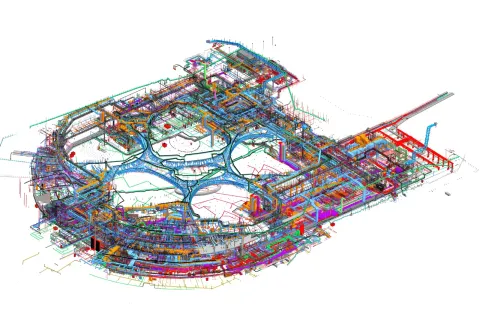
Discipline models built to declared LOD, clash-checked at fixed gates and issued as drawing sets with their checking history attached.
Explore service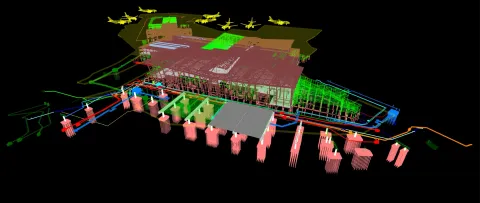
4D and 5D analysis that treats your programme and budget as engineering problems: simulate, measure and correct before site.
Explore service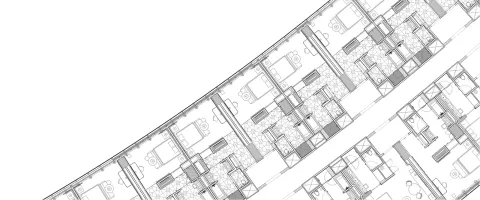
ISO 19650 information management with controlled exchanges, status codes that mean something, and an audit trail that exists before anyone asks for it.
Explore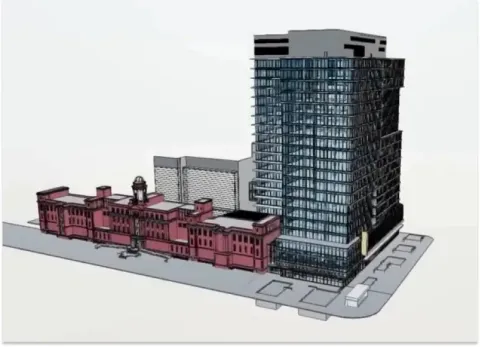
Asset models with verified, structured data at handover, fit to drive your CAFM system rather than sit on a server.
Explore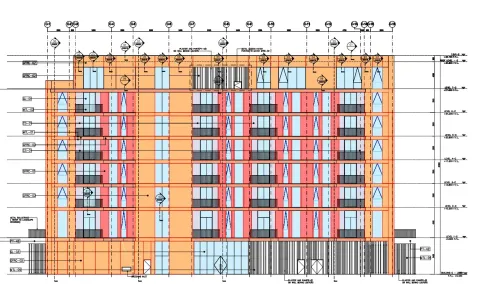
Model-derived quantities your commercial team can interrogate line by line, traceable from BOQ entry back to model element.
Explore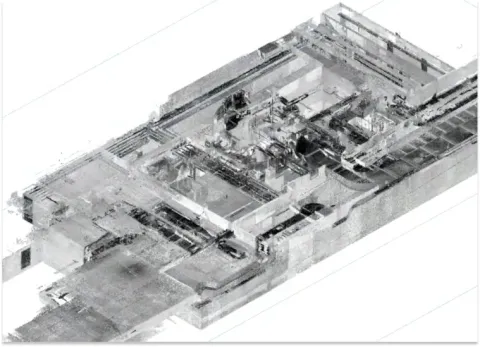
Scan-verified record models that document what was built to measurable accuracy, not what the design intended.
ExploreEight capabilities run under the same gates, so your project gets the same checking discipline whichever one it draws on.
Revit and Civil 3D production across disciplines with federation in Navisworks, governed by one modelling standard and checked at every gate.
Manufacturer-accurate Revit families modelled to your LOD specification, dimensionally reliable enough to coordinate against.
Programme simulation in 4D, cost modelling in 5D and performance data in 6D, each derived from the same federated source.
Shop drawings at fabrication-grade detail, coordinated in the model before a single dimension reaches the workshop.
High-accuracy scan to BIM for existing assets, with declared tolerances so you know exactly what the model can be relied on for.
Legacy CAD converted to coordinated models under the same checking regime as new production, because converted errors are still errors.
Structured FM data mapped to your CAFM fields and validated before handover, so day-one operations runs on the model.
Quantity take-off with element-level traceability: every number in the BOQ points back to objects in the model.
Every JES deliverable moves through a fixed Author-Checker-Approver gate, tracked in the CDE. The same standard whether it's engineer 3 or engineer 250.
Remove the inspection and the defects ship: clashes surface during installation, drawing revisions contradict each other, and the handover dataset fails its first audit. On JES work no file leaves without its three signatures.
Airports, metro systems and cultural landmarks delivered to ISO 19650 in the Gulf under formal supervision, with the QA records to match. The Ortenberg office brings that method to Germany.

The first Sphere venue outside the United States: a 20,000-capacity spherical ve…
Read the case
Terminal-scale design packages for Dar Al-Handasah on Dubai World Central's next…
Read the case
MEP modelled and coordinated across Blue Line stations and depots for MNG Esmas,…
Read the case
Over 100 people at peak across MEP, structural and interior fit-out packages on …
Read the case
Every N+1 and 2N redundancy path verified in 3D against Tier-rating requirements…
Read the case
Mechanical, electrical and plumbing threaded through Foster + Partners' steel-fe…
Read the case
Shop drawing release synced to the tower pour cycle on AFE's fast-track golf-fac…
Read the caseConstruction-ready drawings issued from a clash-resolved model on a published schedule, package after package.
Status lives in ERP dashboards, not in anybody's memory. You query a deliverable and see its author, its checker and its approval timestamp.
The ISO 19650 framework stands from day one, so compliance is a property of the process rather than a report written afterwards.
 6 min
6 min
Why "coordinated" models still cause site rework, and the handoff that fixes it.
Read 5 min
5 min
The difference between a filed document and a working agreement is five sections.
Read 6 min
6 min
Zero hard-clash is not the deliverable and it is rarely the end state. Here is the tolerance, severity and gate regime we hold a federated model to before sign-off.
Read 6 min
6 min
When quantities come straight from the model, variations stop being arguments and become deltas.
Read 5 min
5 min
Retrofitting an as-built at practical completion is a tax. Updating it weekly is a habit.
ReadBoth. We produce the models, drawings and coordination, and we govern the information through BEP authorship, the CDE and the ISO 19650 gate. One accountable team owns both, not a consultancy that advises beside a shop that draws. In a market that measures variance package by package, that single ownership is what keeps the fiftieth deliverable matching the first.
Yes. A delivery lead owns your programme and embeds in your coordination, backed by 260+ engineers producing to a fixed method. Every file carries three signatures, Author, Checker and Approver, so the variance your reviewers watch for is caught before issue. Capacity scales with the programme rather than sitting on your payroll, and one name stays accountable throughout.
Yes. Our consultants embed in your delivery, author the BEP, hold your LOD and check each package against your specification before it ships. Your review cycles shorten rather than multiply, because the inspection happens on our floor first. One named lead is accountable to ISO 19650 across the programme, so the tolerance you work to is met on every issue.
Yes. We laser scan the existing building, register the point cloud and produce a coordinated record model measured against what actually stands. That verified base is what architecture, structure and MEP coordinate against, so deviation is caught in the model rather than at the wall. For precise refurbishment work, it removes the measurement uncertainty before design begins.
Architecture, structure and MEP, modelled in Revit and federated in Navisworks for regular clash cycles on one model. Each file passes the Author-Checker-Approver gate against your BEP, and the inspection record ships with it. Deviation surfaces in the model, not at the installation front, so your site team builds from a set that has already been checked to tolerance.
Scope, disciplines, LOD and programme length drive it. A tightly checked multi-discipline model held to a high LOD carries more hours than a single package, so we scope to the actual work rather than a flat rate. The clearest way to judge the QA before committing is a zero-cost pilot on one package, inspection record included, so you see the gate in action.
The full ACA framework PDF, the Responsibility Matrix template, and the EIR / BEP checklist we use on every project.
We'll walk you through a live ERP dashboard from an active project and you'll walk away with our ACA template, whether or not we work together.
We run the ACA framework on a single package. You get ERP visibility from day one. Zero-cost pilot, capped scope, clear exit.