Author
Model and documentation produced to the MIDP task card. Self-review against the project QA checklist before submission.
Status: WIP

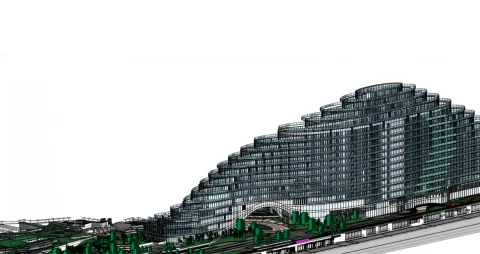
Production, coordination and governance to ISO 19650, delivered as a full BIM team for consultants, contractors and developers. No internal hire, no management overhead.
Design and documentation production at the volume a capital rebuild generates, modelled to your BEP, so a lean practice can carry a significant programme without staffing up against uncertain timelines.
Explore Build-sideTrade coordination and shop drawing throughput absorbed offshore, with clashes resolved in the model before they reach a site where access and materials are constrained.
Explore Owner-sideA single information standard enforced across every consultant and contractor on a scheme, so a rebuilt asset hands over with data that supports both operation and later phases.
ExploreEarly reconstruction in the capital needs a working team before the market can staff one.
Rebuilding Damascus will call for modellers, coordinators and information managers faster than a recovering labour market can supply them. JES mobilises a delivered team of 260+ engineers, so a civic scheme, a housing programme or a heritage-sensitive rebuild runs on a proven system from day one instead of waiting on recruitment.




















Each service runs through the same Author-Checker-Approver gates and ERP tracking, against a single ISO 19650 baseline that holds from a single civic building to a district rebuild.
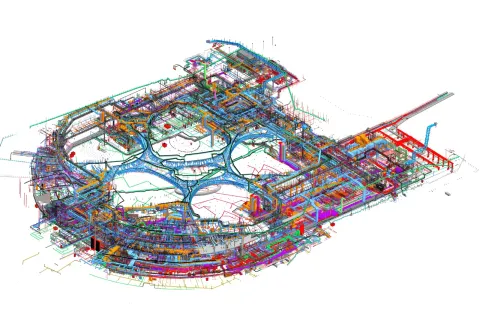
Coordinated multidiscipline models and drawing sets produced to your BEP, checked before they reach your reviewers, so early reconstruction starts on a clean information base.
Explore service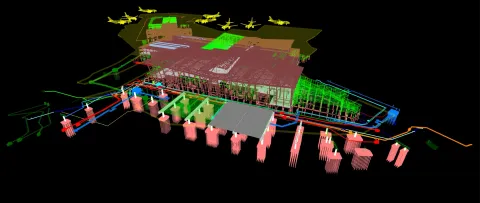
4D and 5D analysis that puts programme and cost questions in front of the team while the sequence and the budget can still be changed cheaply.
Explore service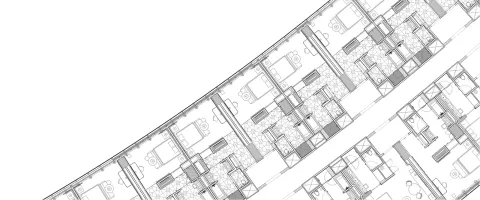
Your CDE, naming protocol and exchange workflows administered day to day, so your information manager governs the project instead of policing uploads.
Explore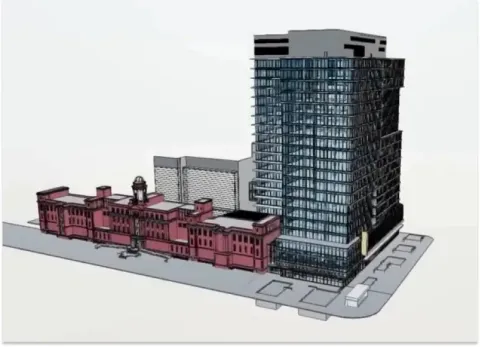
Operational asset models with structured data at handover, built for the operators who will run and maintain rebuilt civic assets over the long term.
Explore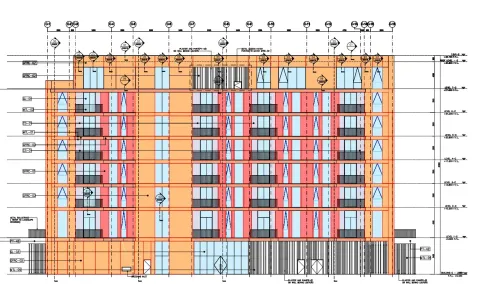
Model-based quantities tied to your cost plan, so funders, contractors and the design team all measure from one defensible number.
Explore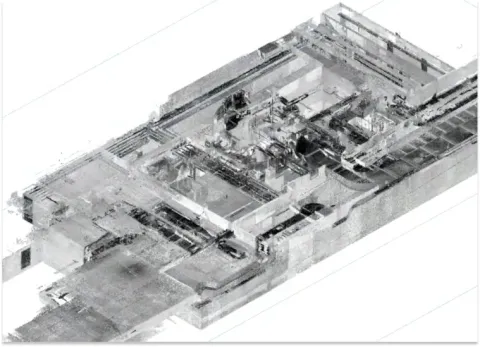
Laser-scan verification and record modelling that document what was actually built and what remains of existing and heritage structures, not what was once drawn.
ExploreThe whole BIM scope from one team, so adding a service never means onboarding another supplier mid-programme.
Full-discipline Revit production with Navisworks federation, run to a single modelling standard your reviewers learn once.
Office-standard Revit families authored to your graphics, parameters and LOD specification, from joinery to plant.
Sequencing, cost and performance data linked to the model, giving planners and commercial teams one model to work from.
Shop drawings detailed to fabrication tolerance and checked against the federation before they leave JES.
Point clouds processed into as-built models, so existing and partially standing structures enter the programme as accurate, working models.
Flat 2D archives converted into coordinated 3D models, so legacy records and older assets get the same single source of truth as new work.
Handover data structured for CAFM import, so a rebuilt asset has a working operating model before it is occupied.
Take-off straight from the coordinated model, mapped to your measurement rules and cost codes.
Every JES deliverable moves through a fixed Author-Checker-Approver gate, tracked in the CDE. The same standard whether it's engineer 3 or engineer 250.
Without that discipline the costs land where a capital rebuild can least afford them: a modelling error repeating across a civic programme, rework draining scarce funding, and information gaps surfacing when a scheme is audited or handed to a public operator. JES files clear three review stages before they reach your CDE, and the record of who authored, checked and approved each one travels with the file.
Towers, transit packages and resort programmes delivered in the Gulf on tight schedules, run on the same ISO 19650 system a reconstruction programme needs. A sample below.

The first Sphere venue outside the United States: a 20,000-capacity spherical ve…
Read the case
Terminal-scale design packages for Dar Al-Handasah on Dubai World Central's next…
Read the case
MEP modelled and coordinated across Blue Line stations and depots for MNG Esmas,…
Read the case
Over 100 people at peak across MEP, structural and interior fit-out packages on …
Read the case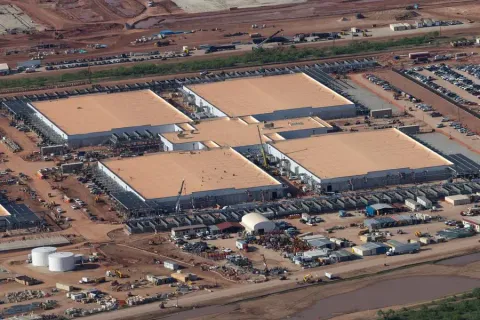
Every N+1 and 2N redundancy path verified in 3D against Tier-rating requirements…
Read the case
Mechanical, electrical and plumbing threaded through Foster + Partners' steel-fe…
Read the case
Shop drawing release synced to the tower pour cycle on AFE's fast-track golf-fac…
Read the caseCoordinated, clash-checked packages issued against your programme dates, so scarce review and site time goes to the build, not to correcting the model.
Deliverable status lives on an ERP dashboard, not in a chain of chasing emails between your office and ours.
ISO 19650 wired in from kick-off, with EIR, BEP and CDE structure agreed before modelling starts.
 6 min
6 min
Why "coordinated" models still cause site rework, and the handoff that fixes it.
Read 5 min
5 min
The difference between a filed document and a working agreement is five sections.
Read 6 min
6 min
Zero hard-clash is not the deliverable and it is rarely the end state. Here is the tolerance, severity and gate regime we hold a federated model to before sign-off.
Read 6 min
6 min
When quantities come straight from the model, variations stop being arguments and become deltas.
Read 5 min
5 min
Retrofitting an as-built at practical completion is a tax. Updating it weekly is a habit.
ReadBoth. We produce the models, drawings and coordination, and we govern them through the BEP, the CDE and the Author-Checker-Approver gate. One accountable team carries the work, not a consultancy advising beside a shop that draws. For a capital rebuild, that means production and standards start on a clean base from a single delivery lead.
Yes. A delivery lead owns your programme, backed by 260+ engineers on one system, so a civic scheme or heritage-sensitive rebuild runs from day one rather than waiting on a recovering labour market. Rebuilding the capital will call for modellers faster than the local market can supply them. We bring the team to the work and scale it against the programme.
Yes. Our BIM consultants embed in your delivery, set the BEP and LOD and hold the work to ISO 19650, with one named lead accountable across the programme. A civic or heritage-sensitive rebuild joins a proven system as the labour market recovers. Your reviewers govern the project rather than carry the modelling volume through a recovery.
Yes. We run laser scan to point cloud to a coordinated record model that documents what actually remains of existing and heritage structures, not what was once drawn. That verified base is what every discipline coordinates against as fabric enters the programme. It gives heritage-sensitive work the accurate geometry such rebuilds depend on.
We model architectural, structural and MEP in Revit, federate in Navisworks and run regular clash cycles on one model. Every file is authored, checked and approved against the BEP before issue, at construction tolerance. On civic and heritage-sensitive work, conflicts are resolved in the model before they reach a site where access and materials are constrained.
Cost follows scope, disciplines, the LOD you need and programme length, so we scope each engagement to the actual work rather than a flat day rate. A civic programme carries more than a single housing scheme. A zero-cost pilot on one package lets you see the output and the QA gate before a capital rebuild budget commits further.
The full ACA framework PDF, the Responsibility Matrix template, and the EIR / BEP checklist we use on every project.
We'll walk you through a live ERP dashboard from an active project and you'll walk away with our ACA template, whether or not we work together.
We run the ACA framework on a single package. You get ERP visibility from day one. Zero-cost pilot, capped scope, clear exit.